
Blog
Vans Range vs UltraRange: Which One Makes More Sense for Daily Wear?
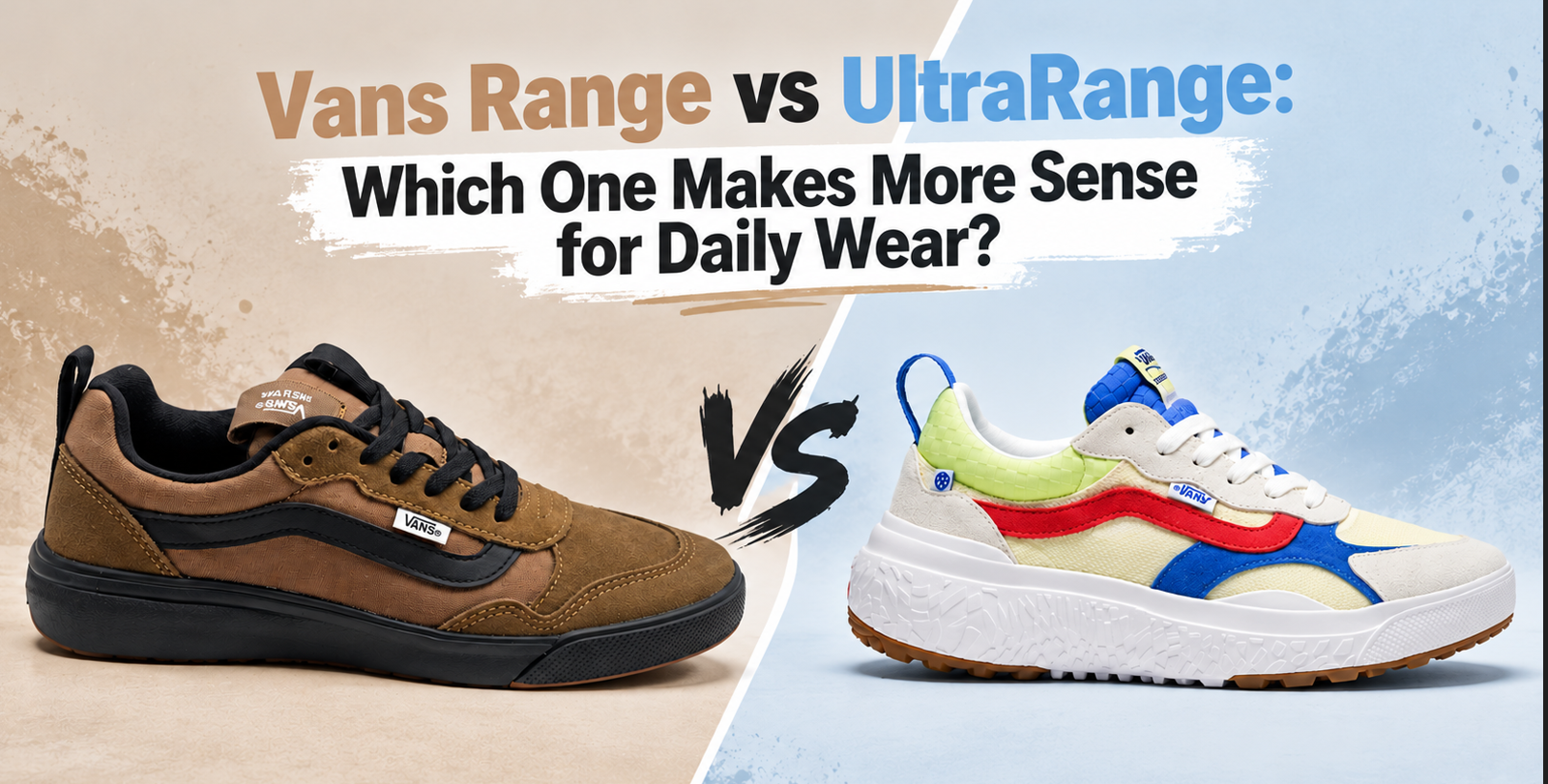
The Vans Range vs UltraRange comparison is closer than it looks. Range EXP already offers lightweight cushioning and outdoor-inspired traction, while UltraRange 2.0 adds more structure, durability, and travel-focused refinements.
Let’s break down comfort, fit, walking performance, sizing, and value.
Vans Range vs UltraRange: The Differences That Matter Most
The Vans Range EXP combines a suede-and-canvas upper with a co-molded UltraCush Lite midsole. Its UltraCush tongue uses ventilation ports to increase airflow, while RapidWeld details reinforce the construction. An integrated Skeleton supports the forefoot, medial side, and heel.
Underneath, a die-cut rubber reverse waffle outsole gives Range EXP flexible multi-surface traction. UltraCush Lite foam absorbs normal walking impact, and the flexible outsole supports natural movement. That makes the shoe suitable for casual daily wear, travel, and general daily walking.
Vans Range vs UltraRange for Cushioning and Construction
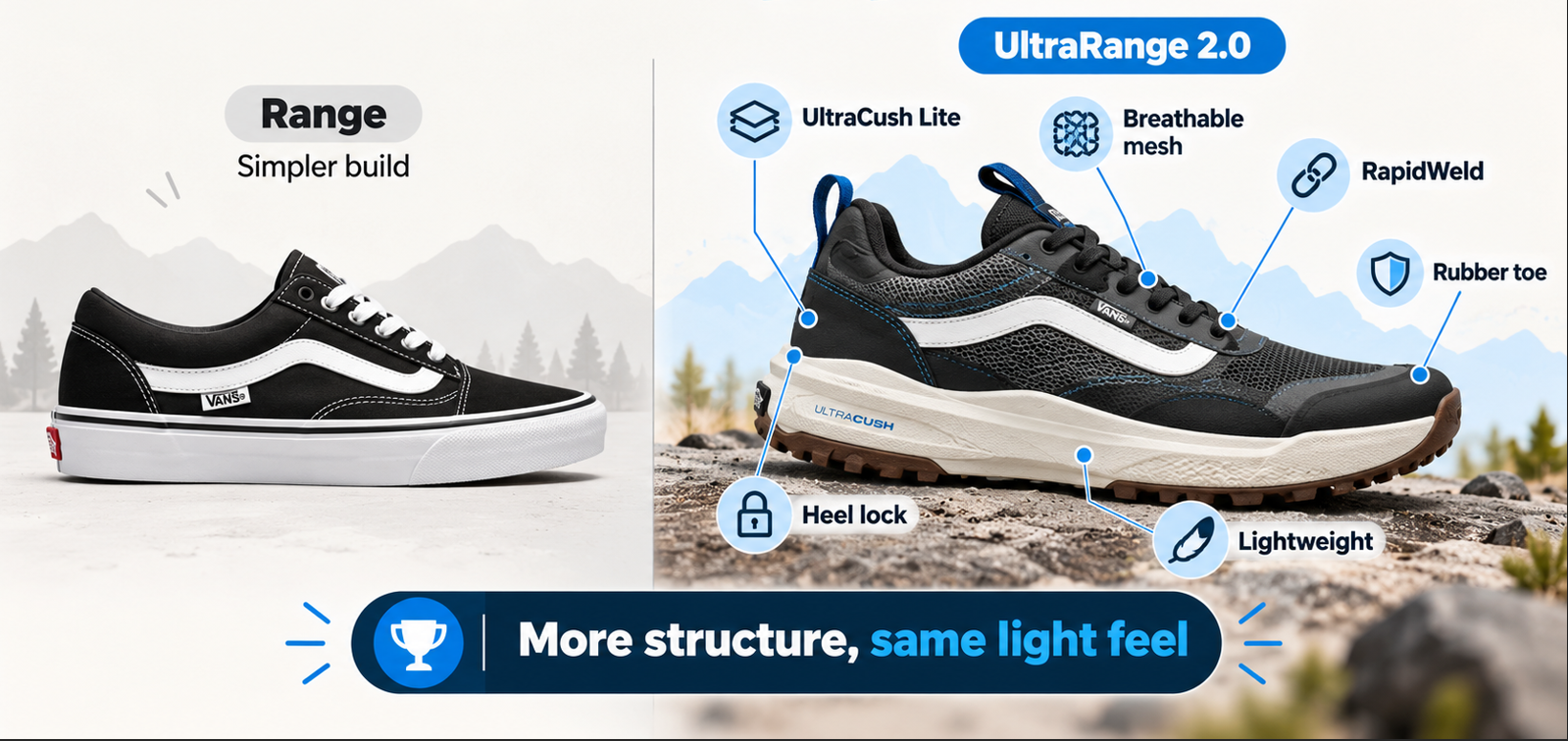
The Vans UltraRange 2.0 also uses UltraCush Lite cushioning, so this is not simply a soft-versus-hard comparison. Vans adds a breathable mesh upper using recycled textiles, RapidWeld overlays in high-wear areas, a molded rubber toe, and heel-lock construction to keep the foot planted.
Those RapidWeld overlays reinforce wear zones, breathable mesh increases airflow, and the rubber toe protects the front of the shoe. The heel lock improves rearfoot security, while recycled textiles form much of the standard 2.0’s mesh upper.
In short, UltraRange 2.0 adds improved structure without abandoning the lightweight feel that defines the UltraRange family.
Vans Range vs UltraRange for Travel and Everyday Walking
For Vans travel shoes or Vans walking shoes, both make sense.
Range EXP stays relatively simple and flexible, whereas UltraRange 2.0 is explicitly designed by Vans for daily wear and light outdoor activities. Its reverse-waffle lugs support grip on mixed surfaces, and the UltraCush Lite foam provides cushioning for longer periods on foot.
The current UltraRange 2.0 has a 7 mm heel-to-toe drop and weighs 299 g in Vans’ men’s size 9 specification. A suede version weighed about 11.8 oz in size 10, showing how materials and size can change the final weight. Extra structure increases shoe weight, but it also improves stability and durability.
Comfort and Fit Can Change the Decision
Fit is where Vans Range EXP vs UltraRange 2.0 becomes less predictable.
Vans Argentina describes Range EXP as having a narrow last and recommends sizing up for more comfort. Yet a Reddit owner with both models found the Range EXP wider through the toe box and preferred it for travel and all-day comfort.
That apparent contradiction matters. Personal foot shape changes comfort perception, and foot width affects shoe choice. If your toes need extra space, comparing the exact pairs in your normal size is more useful than assuming one entire product family is wider.
Range EXP vs UltraRange Sizing and Toe-Box Space
The older Vans UltraRange EXO was noticeably narrow. Its mesh-and-TPU upper had low internal volume, and the narrow forefoot could restrict wider feet.
UltraRange 2.0 addresses that issue with a wider forefoot and more accommodating platform. The reviewer found the tested 2.0 suitable for E/EE-width feet, while the EXO remained much less accommodating. A wider forefoot increases toe room, whereas a narrow upper reduces usable internal volume.
Traction, Durability, and Light Outdoor Use
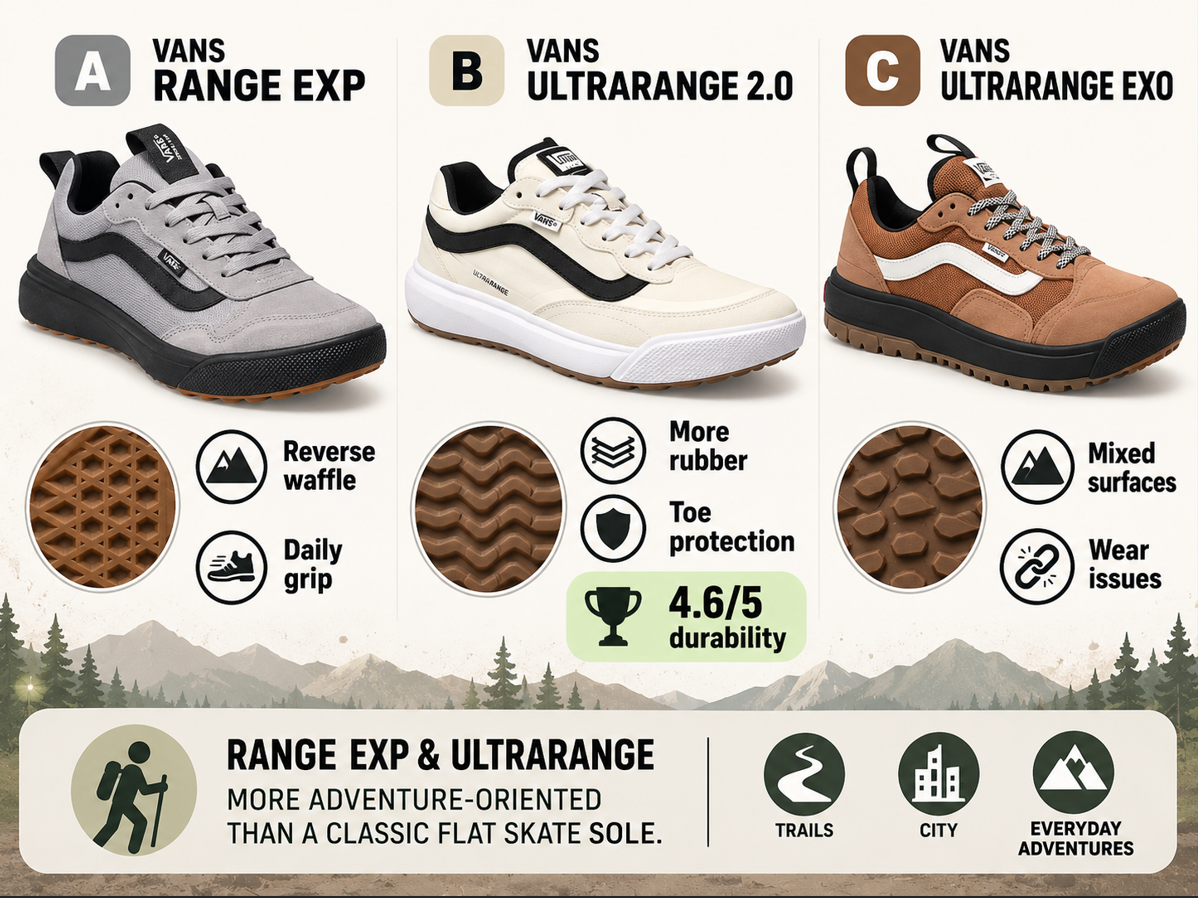
Both Range EXP and UltraRange use Vans’ reverse-waffle concept rather than a classic flat skate outsole. The reverse waffle outsole grips mixed surfaces and remains flexible enough for everyday movement. That makes both more adventure-oriented than a traditional Old Skool.
The UltraRange EXO is capable on dirt, gravel, pavement, and wet surfaces, although it still recommends dedicated hiking footwear for technical terrain. Its soft EVA-based midsole felt comfortable, but the review documented premature cosmetic foam wear and eventually an upper tear.
The 2.0 directly addresses some of those durability concerns. Added outsole rubber improves long-term durability, suede overlays can reinforce high-wear areas, and the molded toe improves forefoot durability. So, we score the UltraRange 2.0 4.6/5 for durability.
Range EXP, UltraRange EXO, and UltraRange 2.0 Are Not the Same Shoe
This distinction is easy to miss.
Range EXP uses UltraCush Lite, RapidWeld-style construction, Skeleton support, and reverse-waffle traction, so it clearly shares ideas with the broader UltraRange concept. Still, it remains its own Vans model rather than simply another name for UltraRange.
The UltraRange EXO prioritizes lightweight flexibility. It uses mesh with TPU support and was praised for comfort and versatility, but its narrower fit and exposed foam contributed to complaints about durability.
We found that different UltraRange generations can receive substantially different comfort ratings.
The Vans UltraRange 2.0 effectively succeeds the EXO concept with a roomier fit, tougher outsole, better forefoot reinforcement, and stronger heel structure.
Vans says the UltraRange family originated around the needs of surf athletes, with professional surfer Pat Gudauskas contributing to the original travel-oriented concept.

Price and Everyday Value
Price can strongly affect the decision. Some Range EXP versions may cost around $80, while the standard UltraRange 2.0 is listed at around $100 in the U.S. Exact prices vary by colorway, retailer, and sale period.
So, intended activity determines the better Vans model.
Range EXP suits casual everyday footwear when you want EVA-style comfort and reverse-waffle traction without paying UltraRange 2.0 pricing. UltraRange 2.0 suits travel and walking especially well when improved support, forefoot protection, and durability matter more.
Pros and Cons
Vans Range EXP
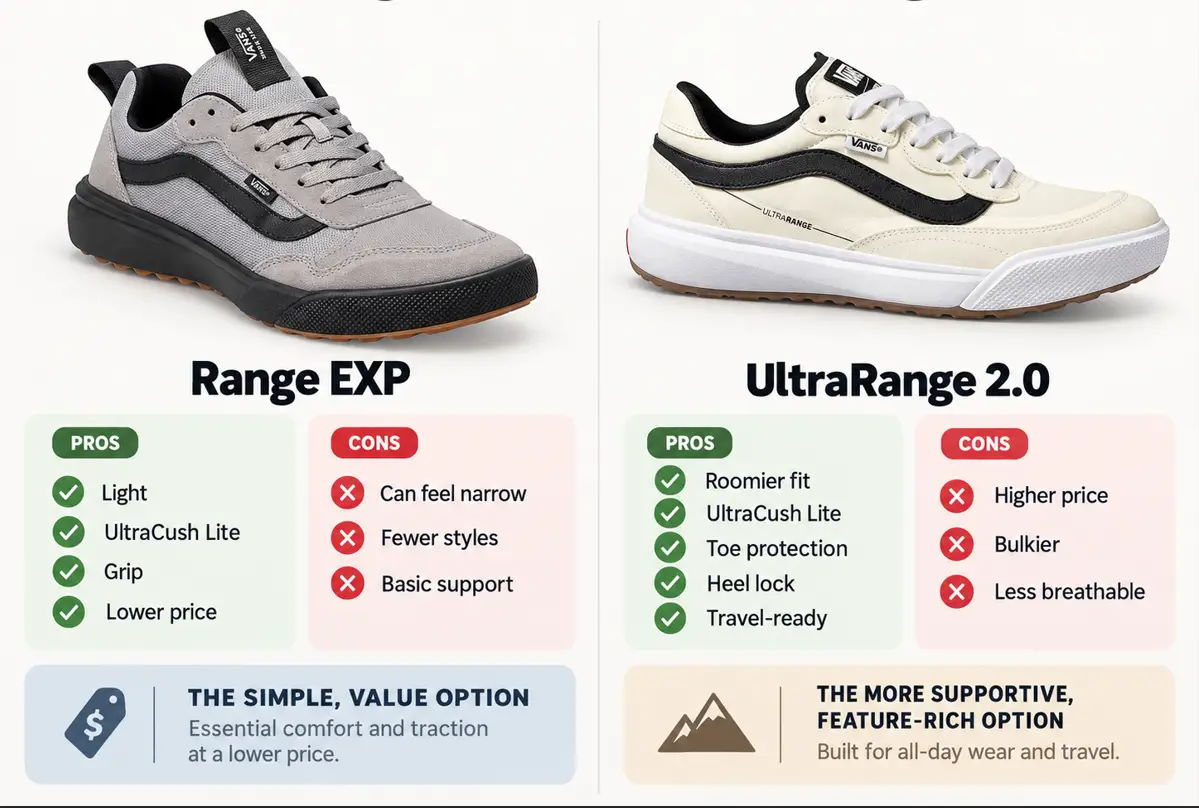
- Pros: lightweight cushioning, UltraCush Lite midsole, suede-and-canvas construction, reverse-waffle grip, breathable tongue, and often lower pricing.
- Cons: fit can feel narrow depending on the foot, fewer current variations, and a simpler support structure than UltraRange 2.0.
Vans UltraRange 2.0
- Pros: roomier updated fit, UltraCush Lite cushioning, molded rubber toe, heel lock, durable RapidWeld reinforcement, flexible traction, and strong travel versatility.
- Cons: typically more expensive, added structure creates extra bulk, and some material versions breathe less than the older EXO.
FAQ
1. Is Vans Range EXP the same as UltraRange?
No. Range EXP is a separate Vans model, although it shares technology with UltraRange, including UltraCush Lite cushioning and reverse-waffle traction. The current UltraRange 2.0 uses its own updated mesh, RapidWeld, heel-lock, and molded-toe construction.
2. Is Range EXP or UltraRange better for walking?
Both can work well for walking. Range EXP provides lightweight EVA-style cushioning, while UltraRange 2.0 adds a more developed heel lock, wider platform, and tougher outdoor-oriented construction for long days on your feet.
3. Which has the wider toe box?
There is no completely universal answer. Vans describes one Range EXP version as narrow, while one Reddit owner found Range EXP wider than UltraRange 2.0.
Compared with the older EXO, however, the UltraRange 2.0 clearly has a roomier forefoot in independent testing.
4. Can you hike in Vans Range EXP or UltraRange?
They can handle light hiking and casual outdoor paths, especially because the reverse-waffle tread provides useful outdoor traction. For technical trails, steep terrain, or demanding hikes, a dedicated hiking shoe offers more appropriate protection and support.
5. Is UltraRange 2.0 worth paying more for?
The extra cost mainly buys you the updated fit, reinforced toe, stronger heel structure, tougher outsole, and more refined travel-oriented construction.
If those features matter for frequent walking or travel, the difference is meaningful; for casual everyday use, Range EXP may already provide what you need.
Final Words
With Vans Range vs UltraRange, Range EXP emphasizes affordable lightweight versatility, while UltraRange 2.0 adds structure, durability, and travel-ready refinement.
Compare your foot width, walking distance, terrain, and budget, then choose the pair that matches how you’ll actually wear it.