Blog
Powerstep vs Superfeet: Which Insole Fits Your Feet and Shoes?
Choosing between Powerstep vs Superfeet is less about finding one universal winner and more about matching support to your feet and shoes.
We’ll compare arch structure, cushioning, plantar fasciitis support, running performance, heel stability, fit, and everyday comfort.
Powerstep vs Superfeet: How Their Support and Cushioning Differ
Both companies make over-the-counter orthotics designed to replace or improve a basic stock sockliner. Their shell-like footbeds hold the foot in position, while arch and heel structures improve foot alignment and add stability.
However, individual models vary enough that the brand name alone tells only part of the story.
Powerstep vs Superfeet for Arch Support and Heel Stability
PowerStep PULSE Performance combines polyester, foam, and a plastic support shell. Its support is measured as moderate, with moderate insole cushioning and a stabilizing heel cup.
The support is firm and cradling. The pair of shoes needs no trimming and is suitable for all-day standing and mild-to-moderate overpronation support.
That plastic shell reinforces the footbed, while arch support insoles can help limit excessive arch collapse. A stabilizing heel cup cradles the calcaneus and improves rearfoot control, which explains why structured support often feels different from simply adding soft foam.
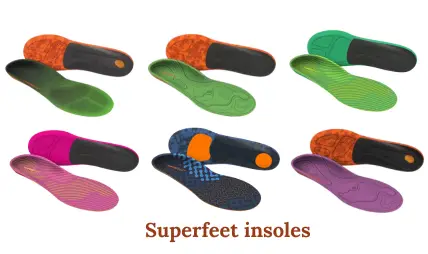
Superfeet can feel firmer. Superfeet Hike Support has medium-to-high arch support, a substantial deep heel cup, and high-density foam for shock absorption.
Its arch is measured at 1.8 cm, toe cushioning at 0.50 cm, and heel cushioning at 0.60 cm; it also comes with a 60-day satisfaction guarantee.
Powerstep vs Superfeet for Cushioning and Shoe Volume
The simple idea that PowerStep is soft and Superfeet is hard does not always hold.
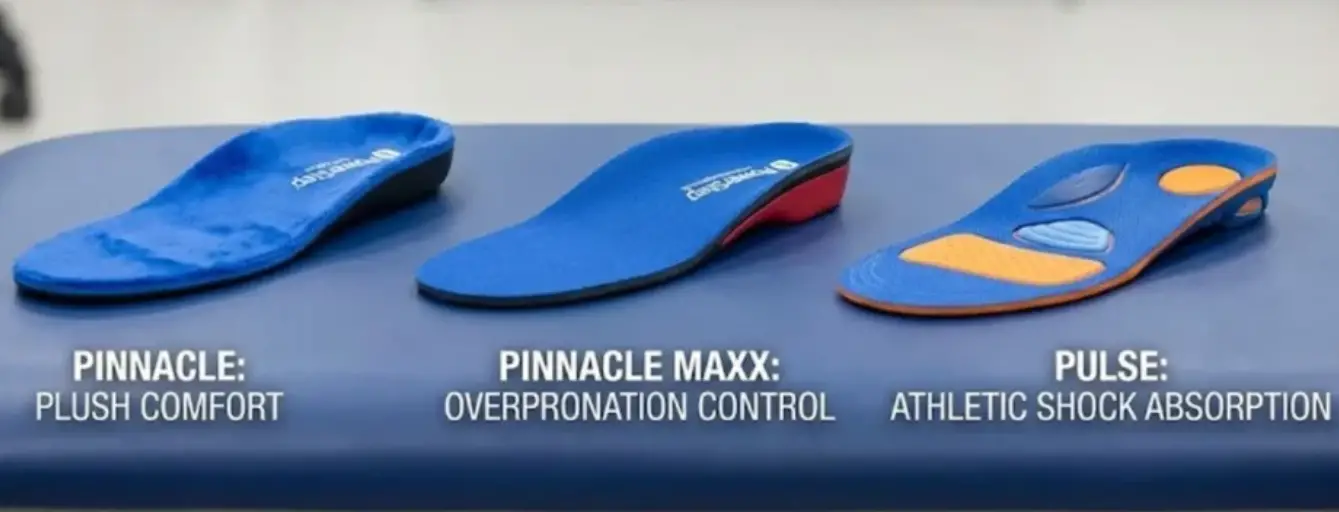
PowerStep often leans toward semi-rigid support, but Pinnacle adds more cushioning, whereas Original maintains a thinner profile. Superfeet Orange is more cushioned than several other Superfeet models.
Shoe volume matters just as much. A thick replacement insole can crowd a low-volume athletic shoe, while a lower-profile model leaves more internal space. Proper insole fit preserves shoe comfort, so your foot shape, footwear volume, gait, and activity should influence insole selection.
Which Works Better for Plantar Fasciitis and Overpronation?
For the best insoles for plantar fasciitis, look beyond softness. Podiatrist guidance emphasizes adequate firmness, a supportive arch, and a deep heel cup.
These features help support the plantar fascia, improve midfoot support, and control the heel rather than merely cushioning heel pain.
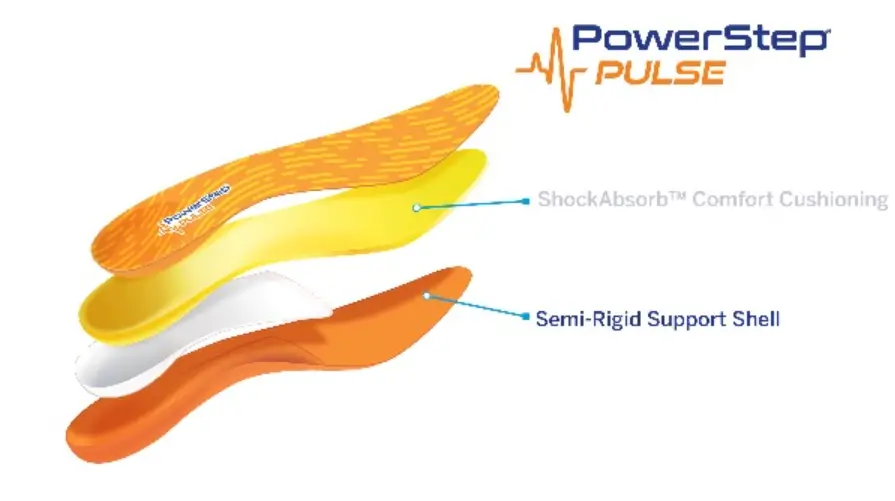
We select PowerStep PULSE as its overall plantar-fasciitis option after testing a number of pairs. Its structured support, stabilizing heel cup, and moderate cushioning combine support with enough shock absorption for walking, long periods on your feet, and repetitive daily impact.
Superfeet offers a different route.
Superfeet Run Pain Relief combines foam and carbon fiber, producing a lightweight structure with moderate cushioning, moderate arch support, and a firm stabilizing heel cup. Its optional heel stabilizer adjusts heel control, and no break-in period.
For pronounced arches, Superfeet All-Purpose Support High Arch is another option. Its arch is measured at 2.0 cm, making it one of the more substantial high arch insoles in the comparison. Its firm arch supports the midfoot without relying on thick cushioning.
Running, Walking, Hiking, and Standing All Day
For active users, PowerStep Pinnacle adds extra cushioning and is positioned toward higher-impact use. PowerStep Original is thinner and better suited to casual daily wear. Pinnacle therefore overlaps with the role of Superfeet Orange, which emphasizes cushioning and high-impact activity.
Superfeet offers even more activity-specific profiles. Orange absorbs higher-impact forces, Black saves internal shoe space with a thinner design, and Blue balances medium arch support with relatively low bulk. Hike Support combines stability and durability for long outdoor days.
For running shoe insoles and distance running, Superfeet Run Pain Relief stands out in the supplied testing. Its carbon-fiber construction is lightweight and responsive, while the heel stabilizer allows extra heel control.
Comfort, Fit, Break-In, and Durability
Firm support can initially feel unfamiliar.
Superfeet Hike Support required some break-in time, although its high-density foam, structured heel, and firm arch produced strong long-term stability.
By contrast, you can feel immediate comfort with Superfeet Run Pain Relief. This means why break-in depends heavily on the model.
The same rule applies to PowerStep.
Your arch height, gait, heel shape, and available space inside the shoe determine whether a semi-rigid orthotic feels supportive or intrusive. Neither brand can compensate for an insole that simply does not match your anatomy or footwear.
Advantages and Drawbacks of PowerStep
- Advantages: firm but often semi-rigid support, strong heel containment, useful options for plantar-fasciitis discomfort, and models ranging from thinner everyday designs to more cushioned athletic insoles.
- Drawbacks: structured arches may initially feel aggressive, and thicker Pinnacle-style designs can consume more shoe space.
Advantages and Drawbacks of Superfeet
- Advantages: wide range of support profiles, strong heel structure, durable options, specialized running and hiking designs, low-profile choices, and dedicated high-arch models.
- Drawbacks: some models feel quite firm, pricing can be relatively high, and certain designs require a break-in period.
FAQ
1. Is PowerStep or Superfeet better for plantar fasciitis?
Both can be appropriate. We select PowerStep PULSE Performance as its overall plantar-fasciitis insole, while Superfeet Run Pain Relief performed particularly well for runners. Your arch shape, symptoms, shoes, and activity should determine the choice.
2. Which has stronger arch support, PowerStep or Superfeet?
There is no single brand-wide answer.
PowerStep PULSE provides moderate structured support, while Superfeet ranges from lower-profile designs to the 2.0-cm measured arch of All-Purpose Support High Arch. Compare individual models rather than logos.
3. Are PowerStep or Superfeet better for running?
Both offer athletic options.
PowerStep Pinnacle targets active use, while Superfeet Orange addresses high-impact activity and Superfeet Run Pain Relief specifically supports distance running. Activity and gait determine the appropriate insole, not the brand alone.
4. Should you remove the original shoe insole first?
A replacement insole normally works best when it occupies the space intended for the original sockliner. However, some thin models may work differently depending on the shoe.
Always check shoe volume and manufacturer fitting instructions before layering insoles.
Final Words
With Powerstep vs Superfeet, focus on your arch, heel stability, shoe volume, and activity. PowerStep offers compelling structured comfort, while Superfeet gives you a broad range of specialized profiles.
Tell us how you walk, run, or work, and compare the matching models first.